
When your knitting gets stuck, what kind of stuck is it?
I am often thinking about what we actually mean when we say we are stuck in our knitting, because it is one of those words that sounds very simple, but can cover quite a lot of different things.
MINDFULNESSWIPSKNITTING CONFIDENCE®LIFE LESSONSPROJECT PLANNING
Nessa Hubbard
5/19/20262 min read
When your knitting gets stuck, what kind of stuck is it?
I am often thinking about what we actually mean when we say we are stuck in our knitting, because it is one of those words that sounds very simple, but can cover quite a lot of different things.
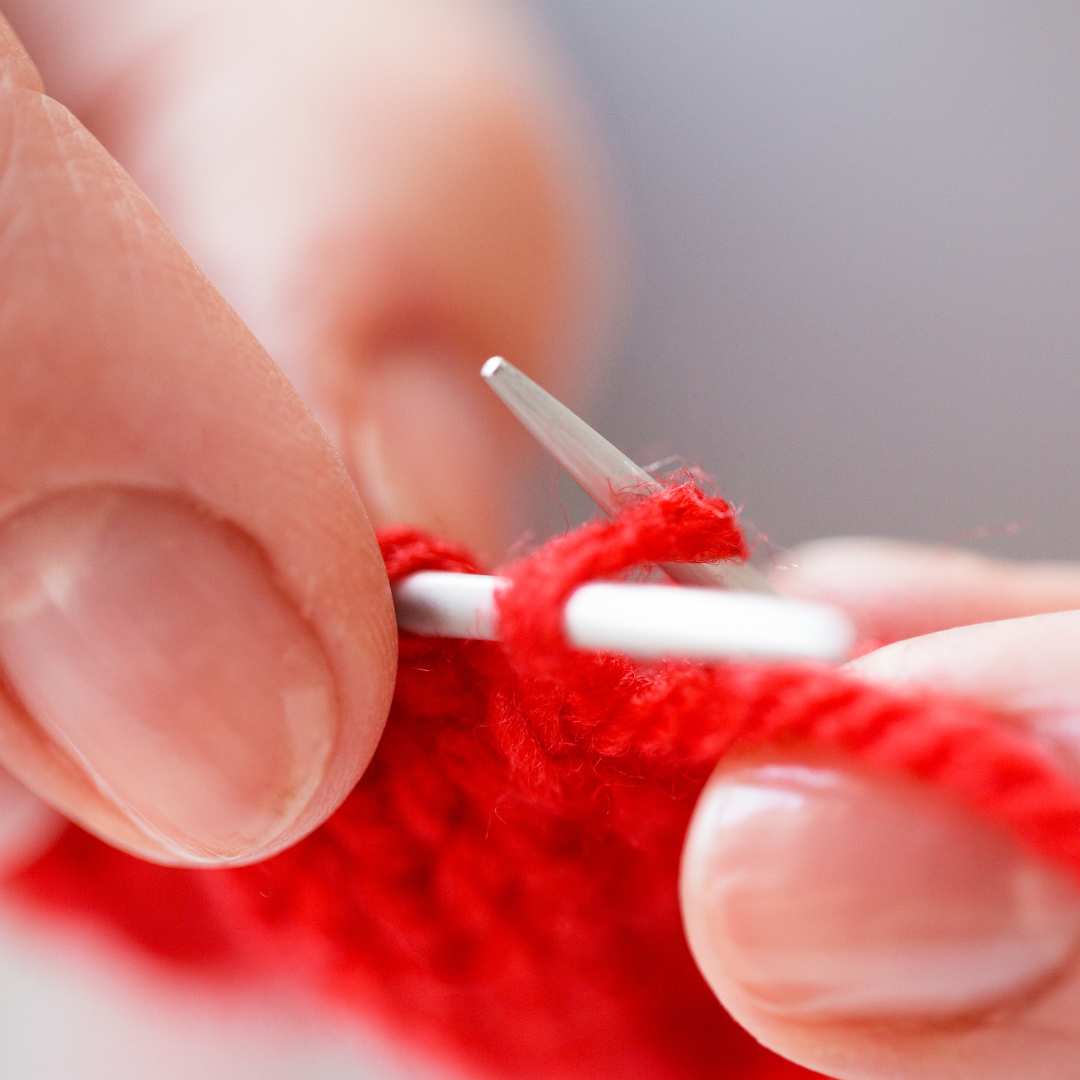
We say “I’m stuck” as though that explains the problem, but it might mean that the pattern has stopped making sense, or that the stitches on the needle do not look how we expected them to look, or that we know something has gone wrong but cannot quite work out what, or that we have reached a point where we probably do have enough information to carry on, but we are nervous about making the next decision in case it turns out to be the wrong one.
And I think this matters, because when all of those different things get bundled together under the word “stuck”, the whole project can start to feel much more alarming than it needs to feel. You can be sitting there with your knitting in your hands, looking at a row or a stitch or a line of pattern, and very quickly the question becomes not “what is happening here?” but “why can’t I do this?” or “have I chosen something too difficult?” or “am I just not very good at this?”
Once your brain has gone there, it is much harder to look calmly at the actual knitting, because the knitting has stopped being a piece of fabric you can examine and has become evidence in a much bigger case against yourself.
That is why I think it can be useful to slow the word “stuck” down a bit.
Sometimes you are stuck because you cannot yet read what the stitches are doing. Sometimes you are stuck because the pattern instruction needs unpacking. Sometimes you are stuck because something has gone wrong and you do not know whether it matters. Sometimes you are stuck because the next step involves making a decision, and you are not quite ready to trust yourself with it.
Those are not all the same thing, and they do not all need the same kind of help.
This is one of the things I notice a lot when I am helping knitters. Someone will come with a problem, and at first it feels like one big tangled knot of “I don’t know what I’m doing”, but once we slow it down, there is usually a more specific question underneath. We might need to look at the stitches. We might need to read the pattern more carefully. We might need to decide whether a mistake is structural or just a small imperfection. We might need to work out what information is missing before the next decision can be made.
The useful thing is not pretending that you will never get stuck. I really don't believe that kind of knitter exists, and I do not think that is really the point anyway.
The useful thing is having somewhere to begin when "stuckness" happens, so that the whole project does not immediately become a verdict on your ability, your patience, or whether you should have started it in the first place.
Because most of the time, being stuck does not mean you have ruined everything. It means there is something to notice. It means there is a bit of information missing, or a decision waiting to be made, or a part of the fabric that needs to be understood before you can move on.
And that is a much kinder, and much more useful, place to start.
Nessa
Nessa Hubbard
nessa@nessahubbard.com
© 2025. All rights reserved.